
Food waste to natural fertiliser.
Saving the environment one bite at a time.
Every kilogram of food waste we collect avoids more than 2.5 kg of greenhouse gas. Here's exactly how that happens.
Our recycling process
Waste Collection
We collect food and green waste from your site on a scheduled basis. Bins are supplied, maintained, and swapped out at every visit — no mess, no hassle for your team.
Natural Breakdown
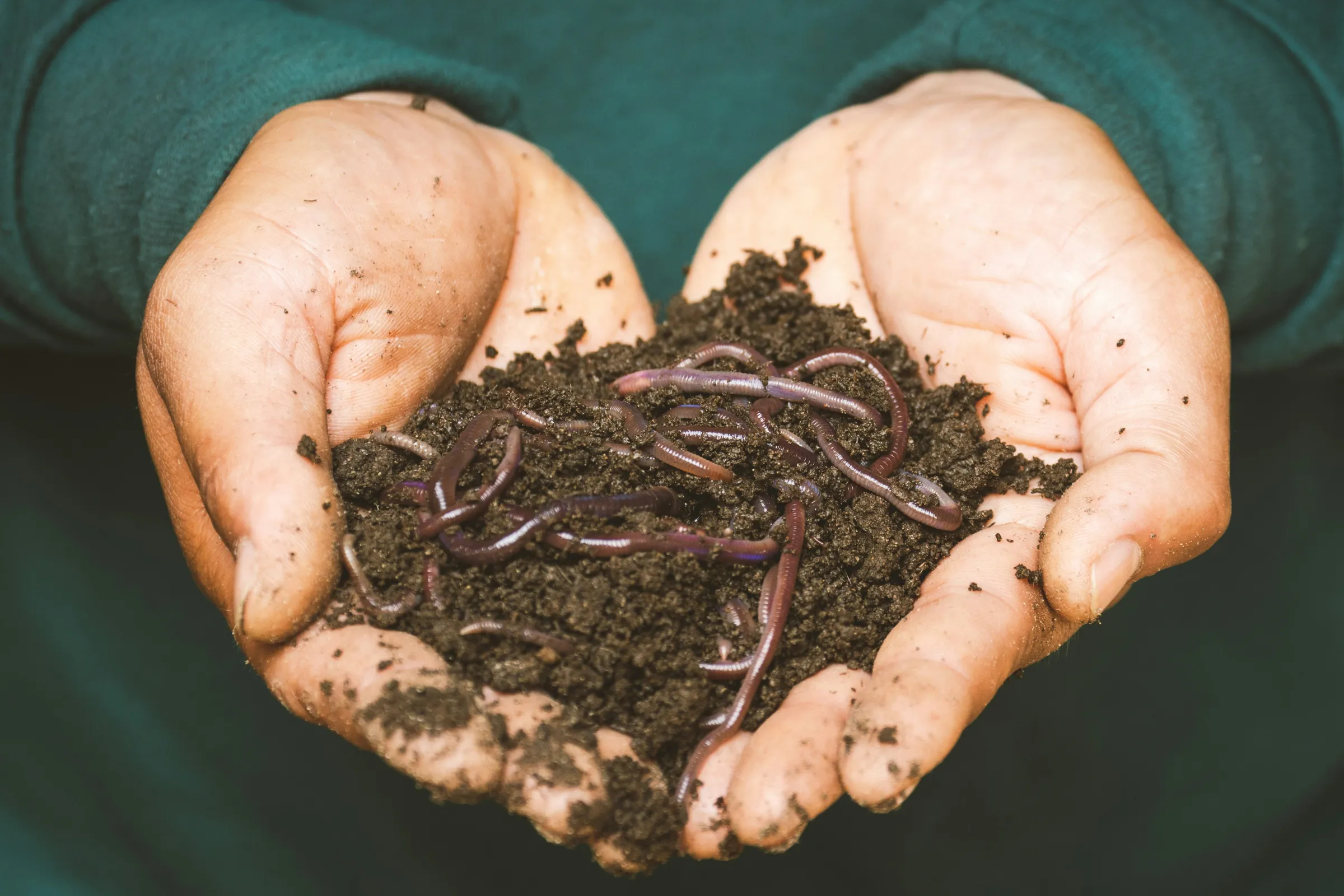
Your waste enters our vermiculture process. Thousands of compost worms convert organic material into premium vermicast — no toxic byproducts, no methane, just nutrition-dense soil amendment.
Industrial Composting
Industrial composting machinery accelerates the process for larger volumes, achieving maximum diversion from landfill and cutting the timeline from months to weeks.
Going Full Circle
The finished worm castings and compost become the foundation of Uncle Bob's regenerative garden products — sold back to you, your customers, and NZ gardeners. Your waste returns as a premium resource.
See the process in action.
Watch our co-founder Mark walk through the composting machine and show what fully processed food waste actually looks like — rich, clean, nutrient-dense compost ready to begin its second life as premium, 100% natural fertiliser.
- Industrial composting, up close
- From raw food scraps to finished vermicast
- No landfill, no methane, no waste
Why food waste matters
The science behind our impact claims — sourced and cited.
come from food and organic waste. It's one of the most impactful — and most overlooked — emission sources.
Source: NZ Ministry for the Environment
For every kilogram of food waste sent to landfill, more than 2.5 kg of greenhouse gas is emitted. Our collection directly prevents this.
Source: UN FAO 2013 Food Wastage Footprint
Methane — the gas produced when food rots in landfill — is 25 times more potent than carbon dioxide as a greenhouse gas. Diverting your waste matters.
Source: IPCC
The full circle
We don't just remove waste. We complete the loop — turning your organic output into a local asset.